How to Give Useful Mix Notes
Specific, consolidated feedback helps your mixer understand what to change, where to change it and which creative priorities should guide the revision.
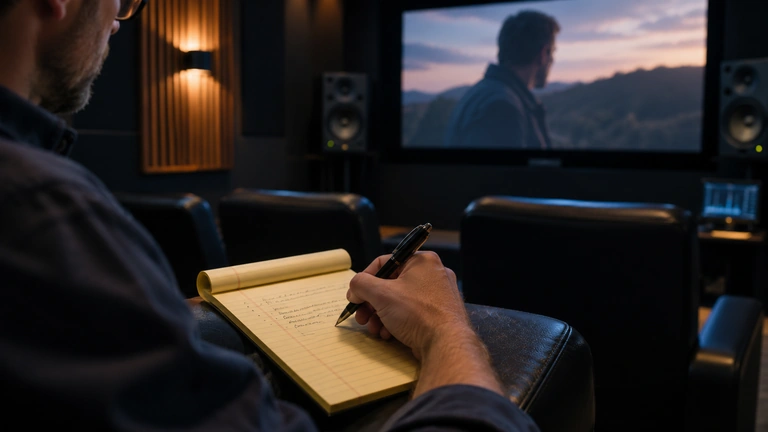
Watch the approval mix before collecting reactions
Start with a complete viewing in the best monitoring situation available to you. A first uninterrupted pass helps you judge the soundtrack as an audience experience rather than as a sequence of isolated technical details. Note the broad impressions as well as the individual moments that need attention.
Confirm that everyone is reviewing the same file and picture version. A surprising number of revision problems come from notes attached to different cuts or different approval mixes. Include the version name in the feedback and keep the reference video available when discussing sync or picture-dependent effects.
Locate each note precisely
A timecode and a short description are usually enough to make a note actionable. For example, identify the line that becomes difficult to understand, the effect that feels too prominent or the music transition that seems abrupt. If a note applies across an entire scene rather than one moment, mark its range and say so.
Consistent timecode is especially important when several people are contributing feedback. Frame-specific references are useful for short effects, while broader ranges work better for dialogue intelligibility, background continuity and overall balance.
Describe the problem and the intended result
The most helpful notes explain what is not working and why it matters. Saying that a line is lost under the music gives the mixer more useful information than requesting a fixed number of decibels. The mixer can then choose the appropriate combination of level, dynamics, equalization, panning or editing.
Creative context is equally valuable. A scene may need to feel more distant, less aggressive, more intimate or less busy. Those descriptions provide a direction without prescribing a technical move that could solve one issue while creating another.
- Name the dialogue, music or effect involved.
- Explain what the audience should hear or feel instead.
- Separate required fixes from optional creative suggestions.
- Mention when one note is an example of a recurring issue.
Consolidate feedback before the revision
When several stakeholders are involved, gather their comments into one organized set of notes. Resolve contradictory requests before the mixing session whenever possible. If two people want different outcomes, the mixer needs a clear creative priority or a designated decision-maker.
Group notes in picture order and remove duplicates while preserving distinct concerns. A single list makes it easier to track what has been addressed and reduces the chance that an important comment disappears inside overlapping email threads or contradictory documents.
Review changes and make approval explicit
On the next pass, check the requested changes and listen to the surrounding material as well. A revision can alter transitions, balances or continuity beyond its exact timecode. If something new needs attention, identify it as a new note rather than silently changing the meaning of an earlier request.
When the mix is ready, make the approval clear and identify the approved version by name. Final delivery should then follow the agreed specification without further informal changes. If another revision is required after approval, communicate it promptly so the delivered files and the approved session remain aligned.